Apps

Notes from the people building them: what we shipped, what we refused to ship, and why it looks the way it does. Expect voice-first workflows, coaching session notes, and privacy-first defaults.

AI note taking for coaches

Most "AI note takers" are built for meetings. Coaching sessions are different: they’re personal, high-attention, and full of nuance that matters later. So we treat AI coaching notes like a product problem, not a transcription trick. The goal is simple: you run the session, and the tool does the admin.

That’s why we bias toward a voice-first flow (one tap to capture), and output that is immediately usable: structured notes, a clean session summary, and explicit action items. Transcription is a component, not the deliverable.

Privacy is part of the design, not a checkbox. If we have to process content to generate results, it’s used only for that, and we aim to keep it short-lived. The best case is that the app becomes invisible: fewer tabs, fewer follow-ups, less context lost. That’s the bar for an AI note taker for coaches.

Live

Coach Notes

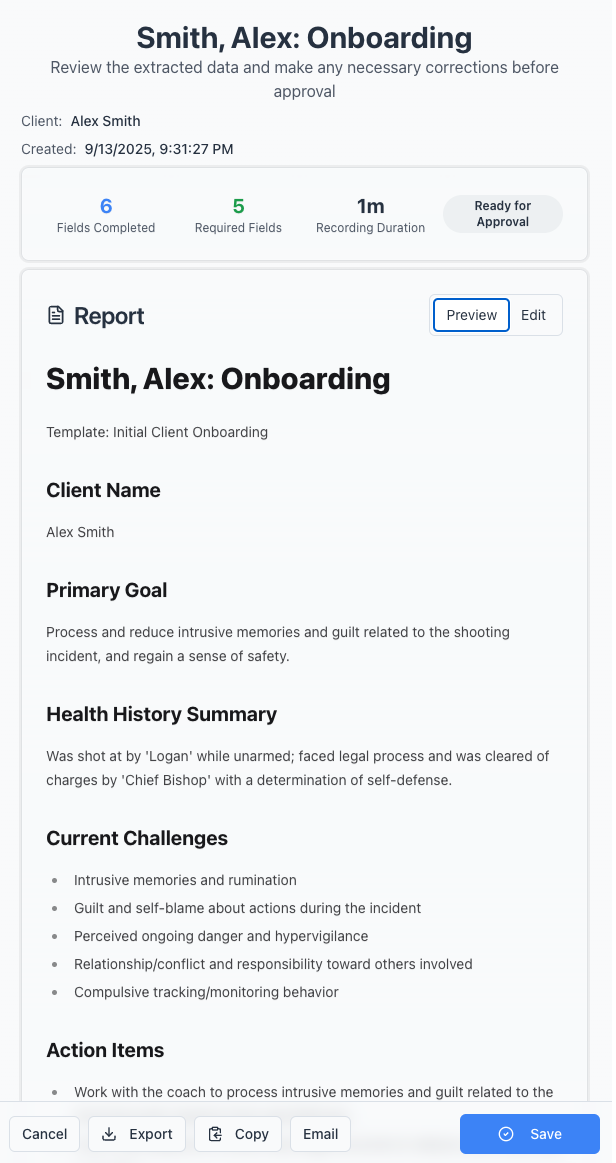
We built Coach Notes because coaching sessions are high-attention work, and admin is the tax that punishes doing it properly. The product is intentionally voice-first: hit record, stay present, then review a structured write-up.
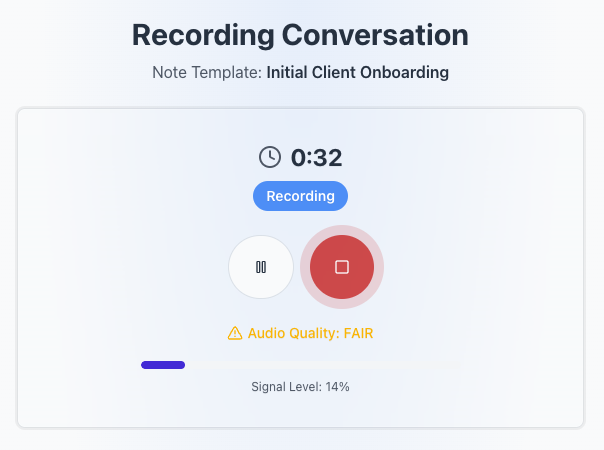
Coach Notes recording interface

What we optimise for

  • Speed to usable output: a note you’d actually send, not a raw transcript dump.
  • Structure without rigidity: extract fields, but keep the human narrative.
  • Compounding context: each session should make the next one easier to run.

Important choices

  • We don’t treat “accuracy” as the only goal; we treat review time as the real metric.
  • We bias toward predictable, coach-friendly schemas (so you can search, compare, and reuse).
  • We keep the interface sparse: the point is to get back to the client, not to decorate the transcript.
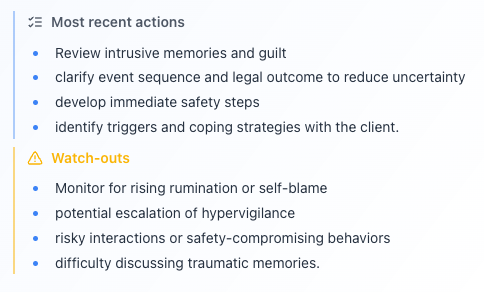
History-aware summaries
History-aware summaries, not just transcripts.
Reports in minutes
Shareable reports in minutes.
In review

Lie Detector

This one started as a design constraint: can we make an analysis tool that feels like a single action, not a workflow? Record a sample, get a truth-likelihood score and the signals that contributed to it.

Product guardrails

  • We call it truth-likelihood. Not a verdict, not a promise.
  • We surface the “why” (signals + language cues), because black boxes breed bad decisions.
  • We intentionally keep the loop short: record → analyze → read.

Why it belongs in Batjko Labs

  • It’s the same philosophy: do the hard work invisibly, then show only what matters.
  • It treats the UI as a tool, not a destination.

Links and screenshots coming soon.

Want early access to upcoming releases? Email contact@batjko.com.