Blog
The Week AI Became Infrastructure
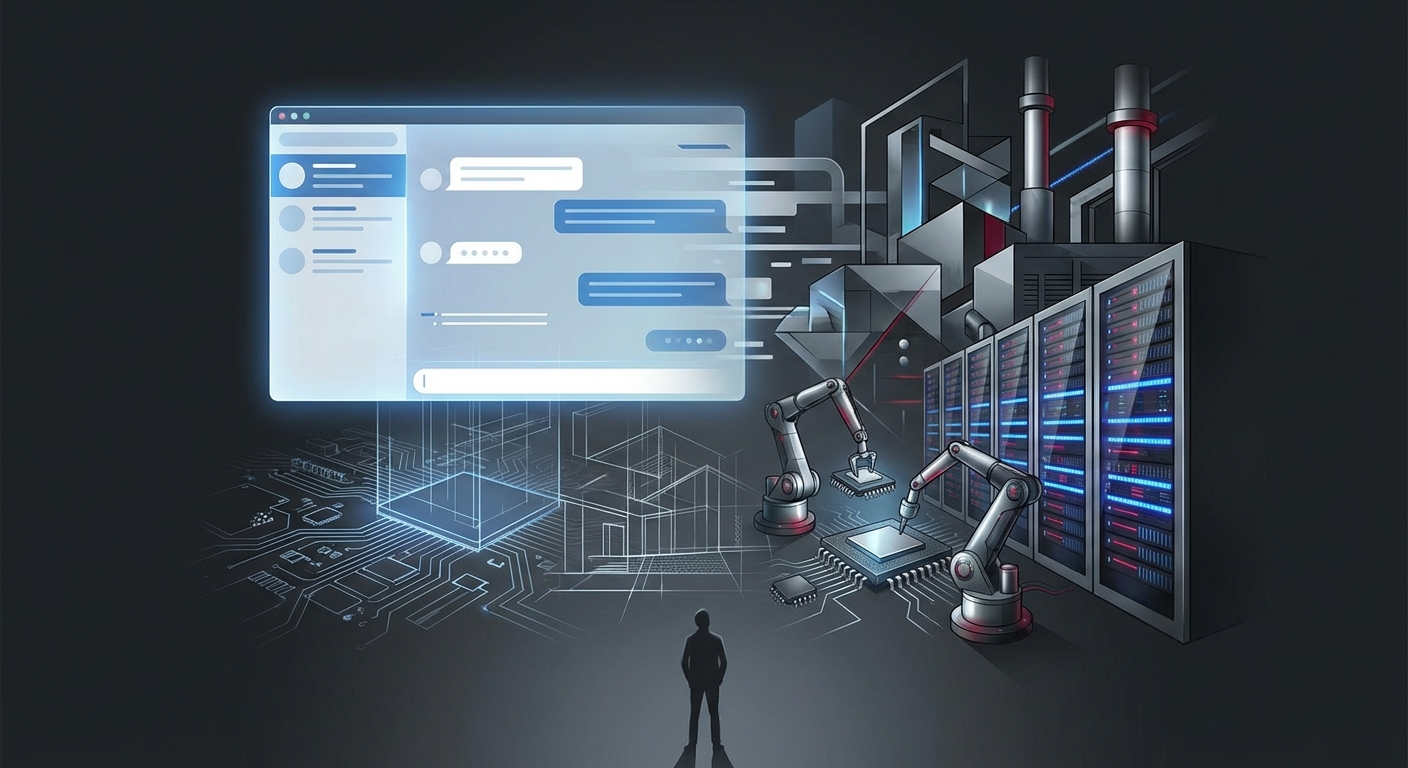
For the past two years, the AI industry has trained us to expect a certain kind of spectacle. A model scores higher on a benchmark. A chatbot sounds a little more human. A demo goes viral because the machine can finally do something that looked impossible six months ago. The story is always about the rabbit coming out of the hat.
This week, the story felt different. The announcements that mattered most were less theatrical and more structural. OpenAI is reportedly preparing to bring Sora directly into ChatGPT, according to Reuters and The Verge, collapsing the distance between talking to an assistant and generating finished video. Reuters also reported that Synopsys has rolled out new software tools to manage the growing complexity of AI chip design, embedding more intelligence into the engineering software used by companies building the next generation of silicon. And ahead of GTC 2026, NVIDIA is framing the whole moment in unusually blunt terms: physical AI, AI factories, agentic AI and inference, all part of a buildout the company says is now measured in gigawatts.
That collection of news items does not read like another product cycle. It reads like the early stages of a platform shift.
The chatbot is turning into a control panel
The easiest way to see the change is at the consumer edge. If Sora moves into ChatGPT, as recent reporting suggests, OpenAI will not simply be adding one more shiny feature to a popular app. It will be taking one of the most computationally heavy and socially consequential creative tools in AI and putting it behind the same box people already use for writing, summarising, coding and image generation.
That matters because user behaviour follows convenience more faithfully than it follows technical elegance. A separate app can be impressive and still remain niche. The jump from “there is an AI video product” to “video is something your everyday assistant can now make for you” is the kind of packaging change that rewires markets.
The Verge rightly noted the darker side of that shift. Making Sora dramatically easier to access would almost certainly widen the flood of synthetic video and intensify the already familiar problems of deepfakes, copyright evasion and watermark removal. But that is precisely why this moment matters. When risk scales with distribution, you are no longer looking at a novelty. You are looking at infrastructure. The tool has crossed the line from laboratory marvel to default utility.
The stack is starting to design itself
The more revealing shift, though, is happening underneath the interface. Reuters’ report on Synopsys’ new engineering tools may sound esoteric next to consumer AI headlines, but it captures the deeper transformation. We are reaching the point where AI is no longer just a workload that runs on chips. It is becoming part of the process used to design the chips, validate the systems around them and compress the time it takes to move from concept to deployment.
That is a genuinely important threshold. Every major technology wave eventually turns inward and starts optimising its own substrate. Railways changed how steel was made. Software changed how software teams worked. Now AI is beginning to change how the hardware, tooling and simulation layers required for AI itself get built. Reuters separately reported this week that Applied Materials has struck partnerships with Micron and SK Hynix on next-generation AI memory, another reminder that the bottleneck is no longer just model cleverness. It is throughput, packaging, memory, power and the industrial choreography required to make all of those things arrive on time.
WIRED added another piece to the picture on Wednesday, reporting that NVIDIA plans to spend $26 billion over five years on open-weight AI models and had released Nemotron 3 Super, its most capable open model yet. Read together with the Synopsys news, that is a striking signal. The old boundaries between model company, chip company and software platform are getting porous. Everyone is moving up and down the stack, because everyone now understands that the prize is not just having intelligence. The prize is owning the system that intelligence runs on.
The real launch is the factory
NVIDIA’s own language ahead of GTC is the clearest tell. The company says this year’s conference will span physical AI, AI factories, agentic AI and inference, with Jensen Huang’s keynote covering the full stack from chips and software to models and applications. The phrase that lingers is not “full stack,” though. It is “measured in gigawatts.” That is the vocabulary of utilities, heavy industry and national infrastructure, not app launches.
TechCrunch’s report on Thinking Machines Lab makes the same point in balance-sheet form. Mira Murati’s company has signed a multi-year partnership with NVIDIA that includes deploying at least one gigawatt of Vera Rubin systems beginning in 2027. One gigawatt is not a metaphor. It is a declaration that frontier AI is becoming a matter of industrial capacity: energy procurement, datacentre buildouts, networking, cooling and capital expenditure on a scale that looks less like SaaS and more like the construction of a new grid.
This is the turn in the story that many people have missed. For a while, it was plausible to imagine that AI’s winners would be decided mostly by model quality, brand charisma or who could ship the most entertaining demos. Those things still matter, especially at the consumer layer. But the centre of gravity is moving. The next competitive frontier will belong to the companies that can make intelligence reliable, cheap enough to deploy everywhere, secure enough for enterprises to trust and deeply embedded enough that users stop experiencing it as a separate category of software.
That is why this week’s announcements feel like more than incremental progress. Sora inside ChatGPT hints at the universal creative interface. Synopsys’ new tools hint at engineering systems that can help design the next wave of AI hardware. NVIDIA’s spending, partnerships and GTC messaging hint at an industry racing to become the operating layer for factories, labs and office workflows.
The real milestone, in other words, is not that AI can now do one more clever trick. It is that the industry is starting to reorganise around AI as a permanent layer of production. If the last chapter was about proving that models could imitate valuable work, the next chapter is about wiring them into the places where valuable work actually happens.
And once that wiring is in place, the conversation changes. The key question is no longer which model feels most magical in a demo. It is which company can make intelligence durable enough to survive contact with budgets, compliance teams, energy constraints and the boring reality of operations. That is a less romantic story than the chatbot race. It is also the more revolutionary one.