Blog
The Ambient Shift: Why the Best Computers of Tomorrow Have No Screens
Remember the first time you used a smartphone and thought, this changes everything? Then remember the next five years of pulling it out of your pocket, unlocking it, opening an app, and putting it back. We traded a revolutionary paradigm for a slightly more convenient version of the status quo. We convinced ourselves that having the entire internet in our pockets was the pinnacle of human-computer interaction, ignoring the fact that we were spending half our waking hours staring down at a glowing rectangle.
The next leap in how we interact with technology isn't going to look like another slab of glass. The real breakthrough is the quiet, frictionless integration of artificial intelligence into everyday wearables. Computing is finally shifting from a destination we actively visit to an ambient, supportive layer we simply live within.
The Screen is the Bottleneck
For the past decade, the tech industry has been hopelessly obsessed with screen real estate. We got bigger phones, foldable displays, and augmented reality visors that look more like industrial welding goggles than consumer electronics. The underlying assumption was simple and fundamentally flawed: to give people more computing power, we just need to give them more pixels to look at.
That assumption is hitting a hard wall of human fatigue. We do not want another device demanding our primary, undivided attention. We want tools that respect our focus and adapt to our environment, not the other way around.
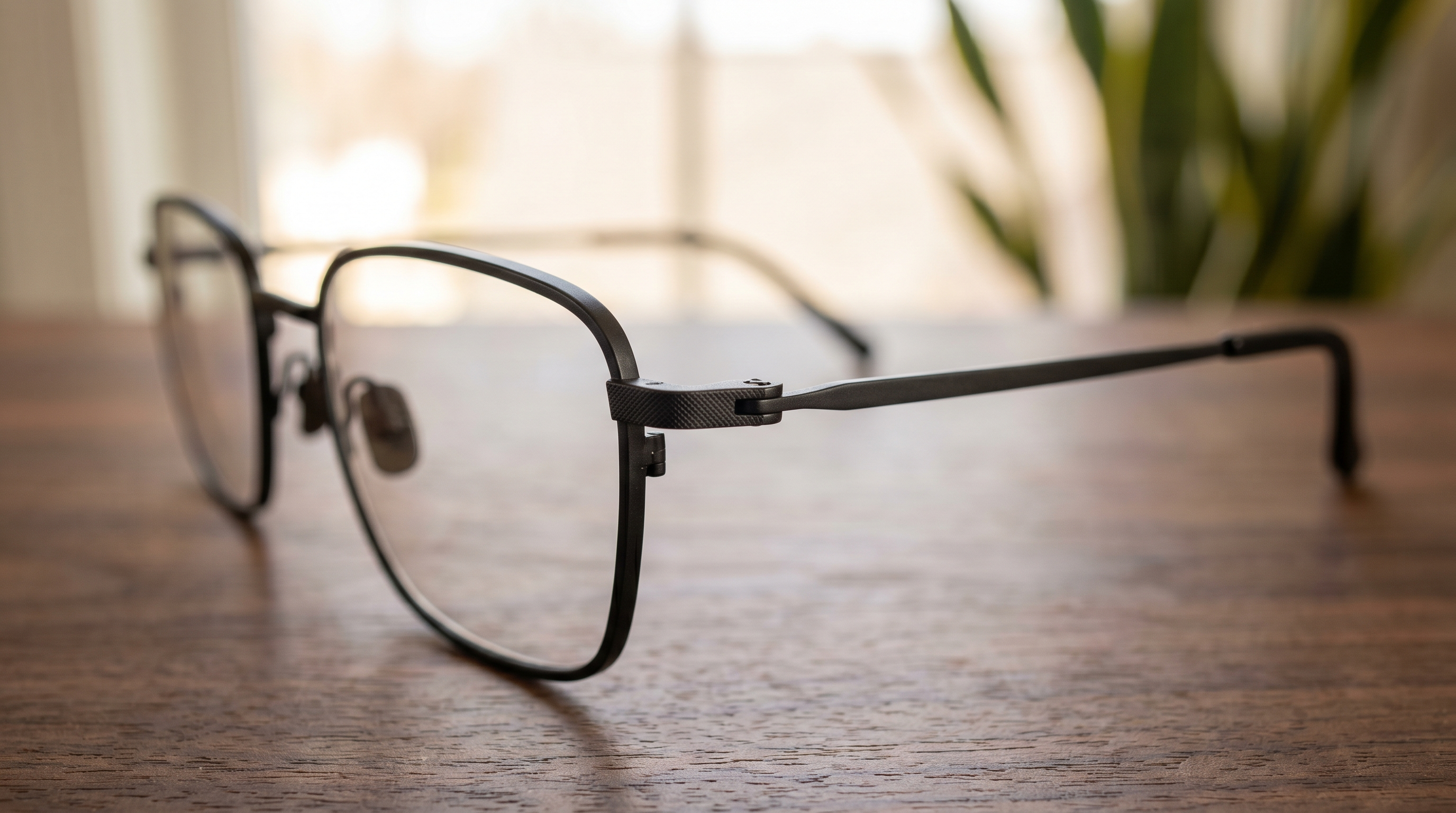
This is exactly where the recent wave of smart eyewear is quietly changing the rules of the game. Take the newly unveiled Rokid Ai Glasses Style. Weighing in at a mere 38.5 grams, it is lighter than a standard pair of prescription frames. More importantly, it is entirely display-free. Instead of trapping you inside a claustrophobic digital interface, it relies on a voice-centric, open AI ecosystem that seamlessly plugs into major models like ChatGPT, DeepSeek, and Qwen.
It doesn't try to replace your phone. It replaces the friction of ever having to pull your phone out in the first place.
Similarly, Even Realities' G1 focuses relentlessly on pure wearability, pairing advanced micro-displays with classic, timeless frame silhouettes that you would actually want to be seen wearing in public. Their underlying engineering elegantly solves the optical ghosting and rainbow effects that plagued earlier generations by seamlessly bonding the display and optical lenses together. The goal isn't to make you look like a futuristic cyborg. The goal is to make the technology completely invisible.
The Utility Phase Has Arrived
We are officially leaving the experimental "gadget" phase of AI wearables behind us. The early, highly publicized failures in this space—think of the Humane AI Pin or the first-generation Rabbit R1—stumbled because they tried to be standalone replacements for smartphones without the robust software ecosystem required to back them up. They were engineering marvels that were essentially solutions desperately looking for a practical problem.
The new wave is entirely different because it is anchored in undeniable, immediate, everyday utility.
Consider the logistics and field service sectors, where early adoption has been strong. Workers using AR-enabled glasses have seen picking speeds improve by up to 40% in complex warehouse environments, simply because their hands remain completely free and the critical data is overlaid exactly where they need to look. But the consumer market is now catching up fast, and the numbers are startling. According to recent market data, consumer AI-enabled smart glasses already made up a staggering 78% of total shipments in the first half of 2025, officially outpacing enterprise adoption for the very first time. The market generated roughly $540 million in revenue last year and is firmly on track to hit $720 million in 2026.
Why the sudden surge? Because the core features actually work in the real world.
Voice AI assistants are currently the most widely adopted feature in these wearable devices, sitting at a massive 74% adoption rate. That single number tells you everything you need to know about user behavior. People do not want to awkwardly tap through nested menus in the middle of a face-to-face conversation. They want to quietly ask, "What did my boss just say in Japanese?", or "Remind me to email Sarah about the Q3 budget when I get to my desk," and have it handled instantly, hands-free, without ever breaking eye contact with the person standing right in front of them.
Stripping Away the Hype
Let’s be absolutely clear: this evolution isn't about living inside some dystopian metaverse. It’s about intelligently augmenting the physical reality we already inhabit and love.
The winning formula for the next five years of practical wearable tech is remarkably unglamorous, but highly effective:
It must look like normal, premium eyewear. If it looks like a piece of tech, it will end up gathering dust in a drawer.
It must be voice-first and eyes-up. Interaction should never require looking down at your lap or tapping on a piece of glass.
It must leverage existing, open ecosystems. Open AI integration will beat proprietary, locked-down walled gardens every single time.
The true friction of modern computing is the unavoidable context switch. Every single time you stop what you are doing to check a notification, you lose a vital piece of your cognitive momentum. Imagine a world where your glasses subtly translate a foreign street sign as you walk past, or quietly summarize a meeting's action items the exact moment you step out of the conference room. No apps to open. No passwords to type. Just frictionless, contextual assistance.
Wearable AI that sits comfortably on your face, listens contextually, and delivers just-in-time information without breaking your physical connection to the world isn't just a nice-to-have feature.
It is the only logical next step for human-computer interaction.
The future of computing isn't a bigger screen. It is no screen at all.