Blog topic

Agentic Engineering

How agents redraw the work of writing, reviewing, and owning software.

The coding agent has left the autocomplete box. It now opens the issue, inspects the repository, changes the files, runs the tests and presents the result for review. That sounds like a faster way to type. It is actually a new way to organise responsibility.

The unit of work is no longer a line of code

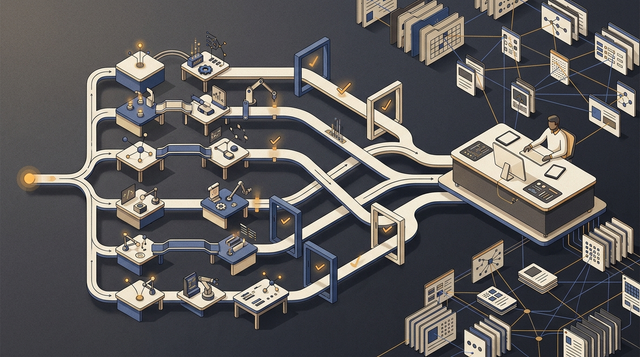
GitHub now describes its Copilot coding agent as something that can take an issue, work in a temporary development environment and return a pull request. OpenAI built the Codex app around several agents working in parallel, each carrying its own task and context. The important shift is not that either system produces code. We have had code generation for years. It is that the systems can hold a piece of work long enough to cross several boundaries without waiting for a person at each one.

That changes the useful unit of engineering. A prompt is too small. A pull request may already be too late. The real unit is a bounded delegation: a goal, the evidence available to pursue it, the permissions it may exercise and the checks that decide whether its work can move. Teams that treat an agent as a quicker keyboard will get quicker code. Teams that redesign the delegation will change throughput, review and the shape of the job itself.

SourcesGitHub: Improve a project with Copilot coding agent · OpenAI: Introducing the Codex app

Cheap production makes judgment expensive

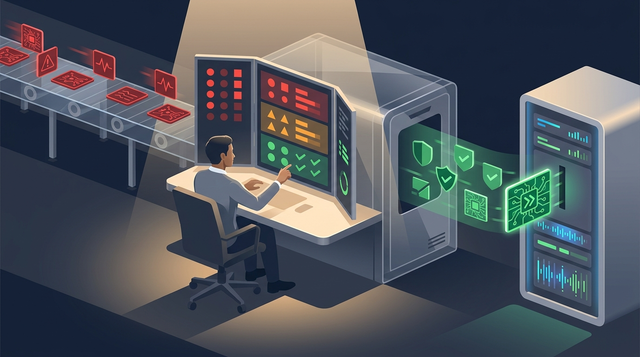
When code becomes abundant, the scarce thing moves upstream. It becomes the ability to specify a useful change, expose the right constraints and recognise a plausible mistake before it becomes a durable one. Review cannot remain a ceremonial look at a green diff. The reviewer needs to understand what the agent was asked, what it inspected, what it assumed and which tests could have failed to notice the problem.

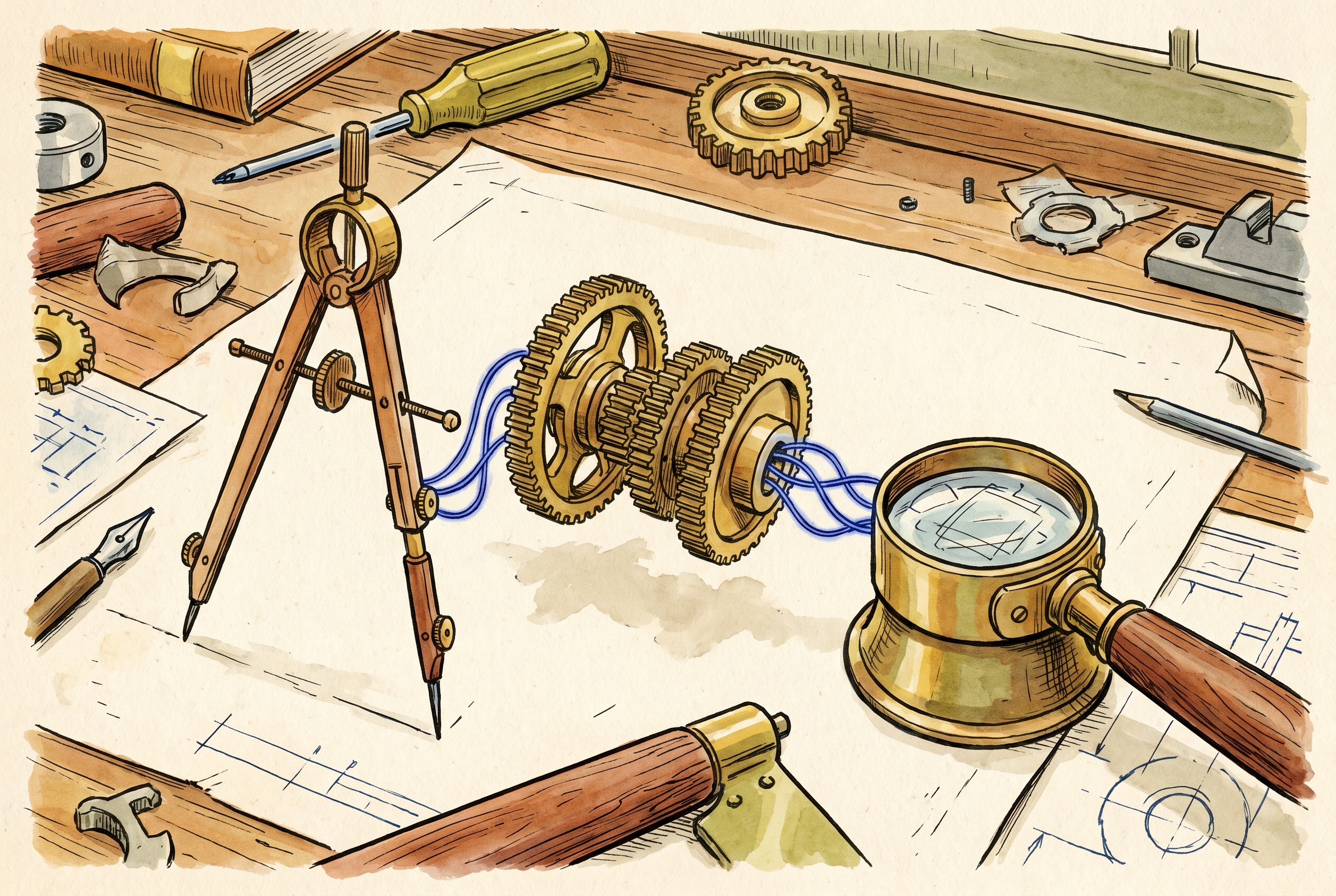
This is where the cheerful story about removing toil meets its invoice. An agent can multiply small misunderstandings with perfect patience. It can also make a mature engineering system visible: repositories with executable conventions, narrow permissions, observable tool calls and tests that describe actual risk become easier for both people and machines to navigate. The codebase starts revealing whether the organisation knew what it meant in the first place.

SourcesNIST: AI Risk Management Framework

The IDE is becoming a control surface

The familiar editor was built around one person manipulating one file at a time. Agentic work puts pressure on that arrangement. The useful screen is less likely to be a wall of generated text and more likely to be a place for routing tasks, comparing evidence, inspecting changes and intervening at the moment judgment matters. The centre of gravity moves from composition to supervision.

That does not make engineers optional. It makes some versions of engineering less defensible. Knowing the syntax while ignoring the system was always a fragile bargain; agents simply expose it. Architecture, product sense, debugging, security and the ability to turn a vague complaint into a testable change become more valuable because they are the parts that determine whether the machine is moving in the right direction.

Ownership survives automation

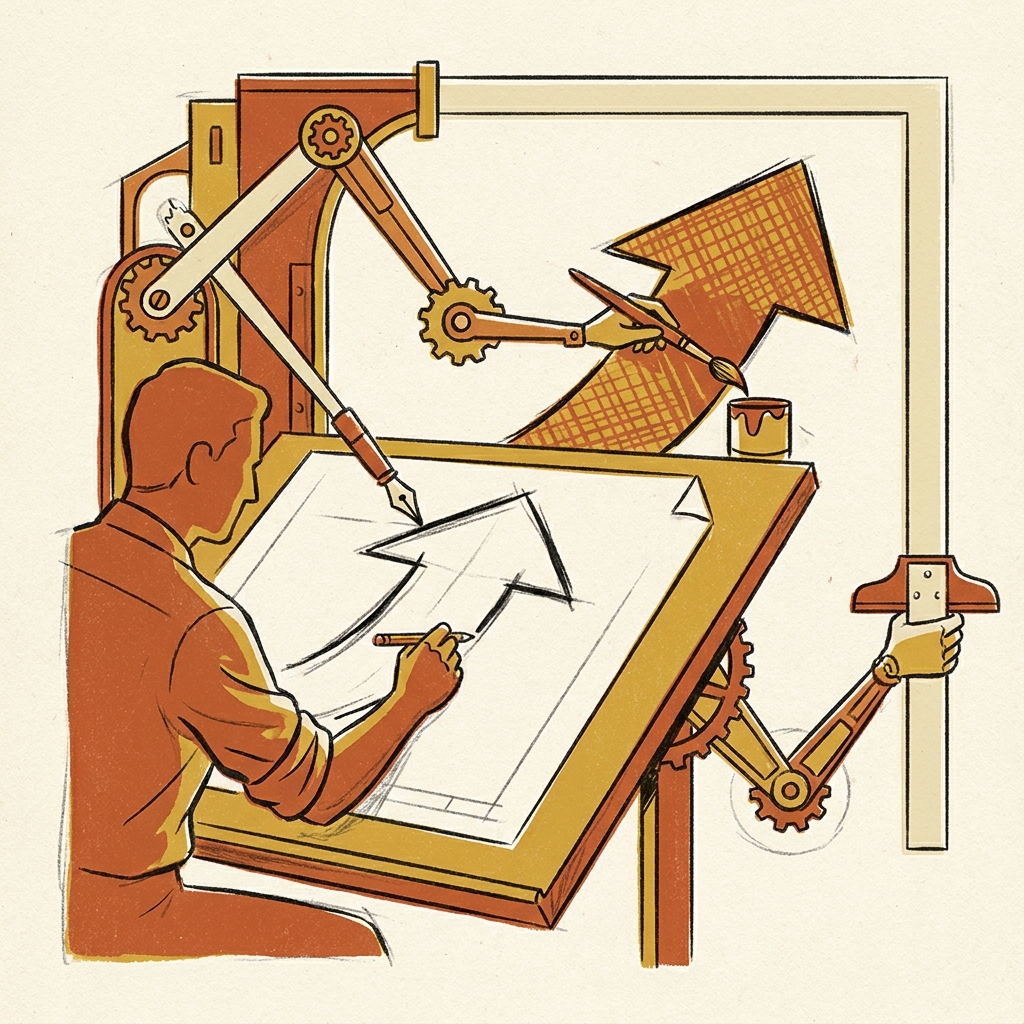
The cleanest fiction in software has always been that authorship and accountability are the same thing. Large systems disproved that long before agents arrived. Agentic engineering makes the separation impossible to ignore. A machine may author the patch; a person or team still owns the decision to merge, deploy and live with it.

The next engineering culture will not be defined by how much code an agent can emit. It will be defined by how confidently a team can explain what the agent was allowed to do, why the result deserves trust and who is still holding the wheel when the dashboard goes quiet.

The hard question is no longer whether agents can write production code. They can. The hard question is whether our engineering systems can absorb that new supply without turning speed into fog.


Reading path

Start here

  1. Agentic Engineering Just Grew Up — And It Brought Receipts
  2. The IDE Is Becoming a Control Plane
  3. The Third Seismic Shift: Why Agentic Coding Is Rewriting Software Engineering

From the notebook

The full thread

The Week the Frontier Got Cheap

The Week the Frontier Got Cheap

Frontier intelligence, frontier cost, and the open-weight race all bent in the same seven days.

Agentic Engineeringaicodingenterprise
The Patch Tuesday That Turned AI Into an Operations Problem

The Patch Tuesday That Turned AI Into an Operations Problem

AI has started finding software flaws faster than most organisations can comfortably absorb them. The fix is not another dashboard. It is a better operating system for patching.

Agentic Engineeringaiautomationsoftware
The Long Tail of AI Is Where the Real Future Lives

The Long Tail of AI Is Where the Real Future Lives

The killer apps of 2026 are not the ones you'll see in the keynote. They are the ones you'll never see at all: the one-person SEO shop that outranked an incumbent on a backwater keyword, the sales rep who gets a whisper in their ear mid-call, the founder who wired an agent to a local database and never told anyone. The interesting work is happening in the seams, the workflows that no one bother...

Agentic Engineeringaicodingagents
Vibe Coding Is Eating Your Codebase. Here Is the Playbook for 2026.

Vibe Coding Is Eating Your Codebase. Here Is the Playbook for 2026.

Code duplication is up 81%. Code reuse is down 70%. Legacy refactoring has collapsed 74% since 2023. The share of commits that touch code older than a year has fallen off a cliff. AI-assisted commits are now roughly a quarter of every commit shipped to a real production codebase.

Agentic Engineeringcodingaiagents
The Week the Substrate Showed Up

The Week the Substrate Showed Up

Six releases in four days, and the quiet moment AI stopped being a destination.

Agentic Engineeringaicodingenterprise
The AI Coworker Is Already on Payroll: A Workplace Operator's Playbook

The AI Coworker Is Already on Payroll: A Workplace Operator's Playbook

Five days. One country ID'd an agent. A rocket company paid $60 billion for a coding copilot. DeepMind called AI agents a $2.9 trillion economic event in the U.S. alone by 2030. The question for anyone running a team in 2026 is no longer whether AI assistants are reshaping jobs. They are. The only question left is which humans stay accountable for the work they ship.

Agentic Engineeringaiagentscoding
How Agentic Coding Really Did Make Software Engineers Optional (And Why That's Wonderful)

How Agentic Coding Really Did Make Software Engineers Optional (And Why That's Wonderful)

A new 400,000-session study from Anthropic quietly redraws the map of who gets to build software. Spoiler: it isn't the people with the best commit history.

Agentic Engineeringaicodingagents
AI’s New Nervous System Arrived This Week

AI’s New Nervous System Arrived This Week

The most important AI releases of the past few days were all about connective tissue: the infrastructure that lets agents carry context, move across surfaces, and operate inside real companies.

Agentic Engineeringenterpriseaicoding
Upriver’s Real Idea Is Bigger Than AI Pipelines

Upriver’s Real Idea Is Bigger Than AI Pipelines

The serious play in agentic data engineering is not faster code generation. It is building enough context, validation, and upstream ownership that agents can operate on live data without turning your platform into a roulette wheel.

Agentic Engineeringautomationsoftwareagents
The Robots Are Already Building the Invisible Future

The Robots Are Already Building the Invisible Future

When SoftBank quietly starts a robotics company to build data centers, and immediately shoots for a $100 billion IPO valuation, you stop asking if this trend is real and start asking how quickly the rest of the economy gets rebuilt around it.

Agentic Engineeringenterpriseautomationcoding
Three-Quarters of Google's New Code Is AI-Generated. That's Not the Interesting Part.

Three-Quarters of Google's New Code Is AI-Generated. That's Not the Interesting Part.

Sundar Pichai dropped a number that should have broken the internet and somehow didn't: 75% of all new code at Google is now AI-generated. But the real story isn't the percentage. It's what happened next.

Agentic Engineeringaicodingagents
The AI Coding Stack Is Composing Itself

The AI Coding Stack Is Composing Itself

How Cursor, Claude Code, and Codex accidentally became the layers of a composable engineering pipeline — and why multi-agent swarms are the real step-change

Agentic Engineeringcodingaiautomation
The Third Seismic Shift: Why Agentic Coding Is Rewriting Software Engineering

The Third Seismic Shift: Why Agentic Coding Is Rewriting Software Engineering

Autonomous AI agents are no longer assisting developers — they're starting to manage entire projects. The question isn't whether this changes everything, but how fast.

Agentic Engineeringcodingaisoftware
We Broke the Code Assembly Line — and Nobody's Quite Sure What Comes Next

We Broke the Code Assembly Line — and Nobody's Quite Sure What Comes Next

AI didn't just speed up software development. It flooded it. Now the industry is scrambling to figure out what to do when the machines ship ten times more code than any team can review.

Agentic Engineeringaienterprisecoding
Agentic Engineering Just Grew Up — And It Brought Receipts

Agentic Engineering Just Grew Up — And It Brought Receipts

How coding agents went from autocomplete party tricks to the most contested infrastructure in software, and why the real story is about who controls the loop.

Agentic Engineeringcodingaienterprise
AGI Already Here (Functional, Quiet, and Mostly Unsaid)

AGI Already Here (Functional, Quiet, and Mostly Unsaid)

Silicon Valley is having a quiet revelation. Not a public manifesto, not grand proclamations — just private conversations, late-night DMs, and the occasional blunt sentence at a dinner table.

Agentic Engineeringaiautomationcoding
The Cognitive Mirror and the Silence About Already-Here AGI

The Cognitive Mirror and the Silence About Already-Here AGI

The sharpest minds in Silicon Valley are quietly admitting something unsettling: the system they talk to every day already behaves like general intelligence, and the debate over definitions is starting to feel beside the point.

Agentic Engineeringaicodingenterprise
The IDE Is Becoming a Control Plane

The IDE Is Becoming a Control Plane

OpenAI, GitHub, and Microsoft are converging on the same future: software engineers will spend less time typing code and more time directing persistent, parallel machine labor.

Agentic Engineeringcodingautomationagents
Agentic AI and the Next Intelligence Explosion, Without the Singularity Myth

Agentic AI and the Next Intelligence Explosion, Without the Singularity Myth

Why a new paper from Benjamin Bratton and Blaise Agüera y Arcas is really an argument for institutions, not just smarter models

Agentic Engineeringaicodingagents
The Next Interface Won’t Live in a Tab

The Next Interface Won’t Live in a Tab

Why this week’s AI launches make one thing obvious: software is leaving the dashboard era and becoming an ambient, action-taking layer around daily life.

Agentic Engineeringagentsaicoding